After breakfast, we spent the morning with Jason Markwell, a senior intellectual property pharmaceutical lawyer, at his office high above downtown Toronto. He spoke to us about alternative career paths for graduates with science degrees, which included law, business and the government, as well as the more obvious examples such as research, industry and NHS work. To illustrate this, he spoke about his own experience of gaining a science degree before going on to study law in order to protect patents of drugs from copying by rival drug companies. It was reassuring to learn about the many possible career paths stemming from a science degree and the different opportunities available.
We also learnt in more depth about the process of drug discovery. It begins with a biochemist who considers the necessary shape and components of a molecule that would be required to have the desired effect on the active site of a protein within the body. A drug can act as an antagonist by mimicking the body’s natural molecule, or as an antagonist by preventing the body’s natural molecule from binding. An organic chemist then devises a reaction mechanism in order to produce this molecule from more basic building blocks. When the molecule is made, it is vigorously tested by a biophysicist in order to test solubility, structure and other properties using techniques such as chromatography and NMR spectroscopy. Basic proteins that resemble the target protein are also synthesised to use in in vitro testing, to determine how well the drug binds to the target protein and the effect that the drug has on it. The potential drug is then tested by cell biologists to determine the drug’s activity within cells in a culture, to see if it has any unforeseen effects on other proteins within a living cell. After that, the drug moves on to the in vivo phase of testing, where it is tested first in a mouse or rat, then a dog, and then a primate, in order to determine its side effects and how well it is metabolised by the body. If a drug passes through the body too quickly, it is unlikely to have had the desired effect as it may not have been properly absorbed. Conversely, if the drug stays in the body for an extended period of time it may not be suitable for use in humans. If the drug survives all those tests, it moves on to phase 1 clinical trial, which is carried out in a small group of around 20 healthy individuals, in order to assess absorbance in the body and the side effects produced by the drug. It then progresses onto phase 2 clinical trials, which uses a small group of participants with the targeted disease to determine whether the drug is effective in treating that disease, and the optimum dosage required to do so. After that, the drug proceeds to the final stage of clinical trial, stage 3, where a much larger group of around one thousand diseased participants are randomised into a control group which will receive either a placebo (if no other treatment is currently available), or the current best treatment for the disease. The other half of the participants are stratified based on a characteristic such as age in order to test the new drug. If the drug proves more effective than the placebo or best current treatment (e.g greater efficacy or less side effects), it can be marketed an prescribed by a doctor to patients.
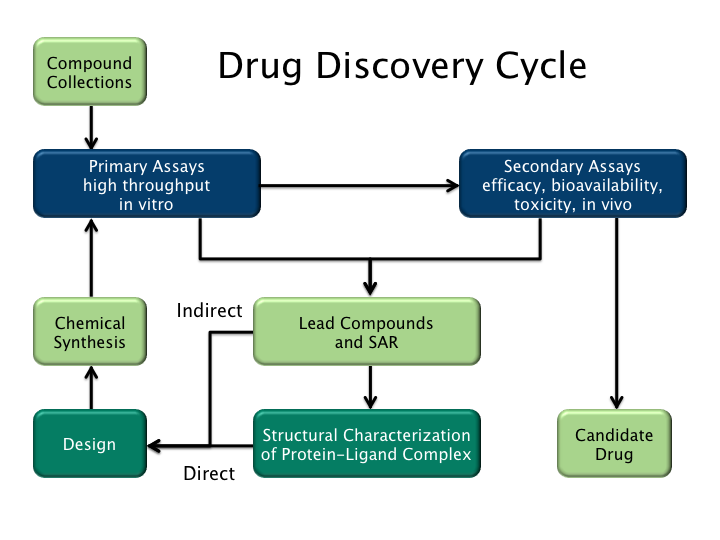
This process typically takes around eight years to complete, and around 90% of molecules that are synthesised by the organic chemists do not make it to this stage. It is also estimated to cost around $1 billion to develop and test a drug, which helps to explain why the patenting of drugs in their early years is so important in order to compensate for expenses and make a profit. In the early stages of the molecule’s synthesis, the researcher would file a patent request regarding the technique used to do so, in order to prevent companies from attempting to copy the idea. A patent usually lasts 20 years, but by the time the drug is released into the market, the company has around 12 years to make a profit from the drug through royalties and marketing, before other companies can use the idea to develop similar drugs.
We also learnt about the issues surrounding the funding of drug development, particularly concerning smaller spin-off companies. Applications must be sent made to the government to request a grant and agencies such as venture capitalists in order to loan the money required to synthesise, analyse and test the drug. Issues may arise with the level of equity adopted by a venture capitalist, which can be as high as 60%, which can make it hard to make a profit. Other difficulties that can arise in the process of drug development include persuading physicians to prescribe the new drug over existing drug, as well as persuading the government in countries with a national healthcare system to fund the drug. If the drug is extremely expensive to produce, a higher price will be charged for it by a company, which is less likely to be bought by the government if a cheaper equivalent drug exists. We learnt so much about the complexities of drug discovery, and the effects of competition, economy, funding, and the government and other agencies on the success of drug development.
It was a very interesting and informative meeting with Mr Markwell. He presented us the processes involved in research moving from the “bench the bedside” – the link in our programme from the Gunning Group cancer research lab to our upcoming visit to the University of Toronto Health Network.
After that we headed out onto the street and fought our way through the enormous crowds watching the Toronto Raptors Parade on our way to the Royal Ontario Museum. The streets were unbelievably busy as around 2 million people gathered in the city centre for this huge event. It was the first time Toronto had won the NBA basketball World Championship – in fact, the first time it had been won outside the USA. There was an ecstatic atmosphere in the area and it was amazing to be part of it.
/arc-anglerfish-tgam-prod-tgam.s3.amazonaws.com/public/FW7EAXLPNBCB7CL5V2YGJ2SHVY.jpg)
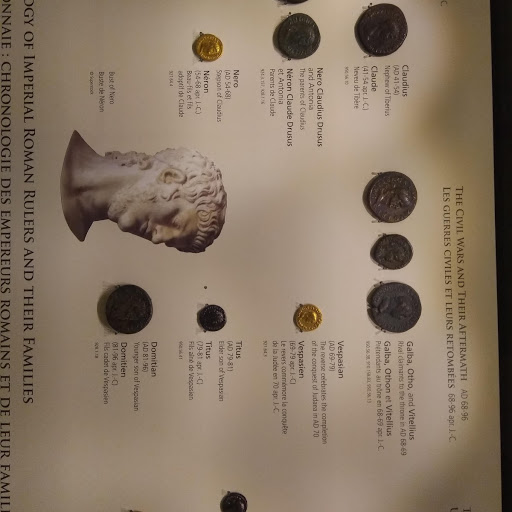
We then visited the Royal Ontario Museum where we grabbed a bite to eat before looking at the exhibits. The museum is the largest in Canada and contains more than 6,000,000 artifacts. We explored the Roman culture, the natural history and the fossil exhibits. They were all very interesting in different ways. In the Roman culture exhibit we saw old coins and pottery excavated from archeological digs.
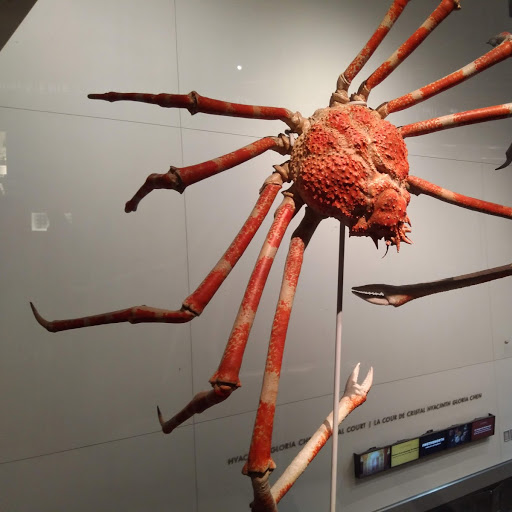
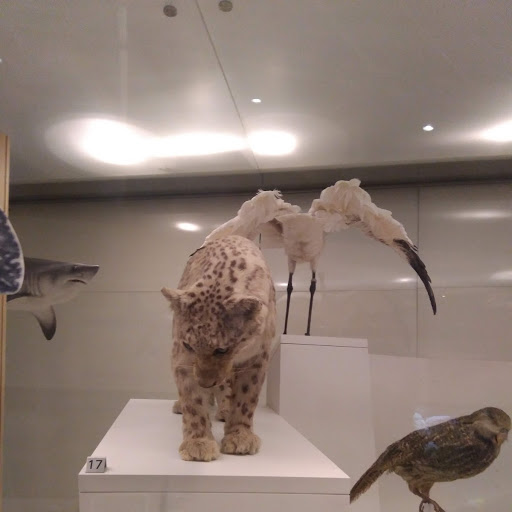
The natural history exhibit featured an array of taxidermy and model animals, some of which we recognised from the zoo. One of the exhibits we found very eye catching was the spider crab, it was enormous. A really interesting part had an exhibit showing animals that were extinct or critically endangered. Amongst which the snow leopard stood.
We then entered the prehistoric creatures and fossil exhibit. It talked about gigantism and other genetic anomalies that were discovered through the studies of recovered skeletons and fossils.
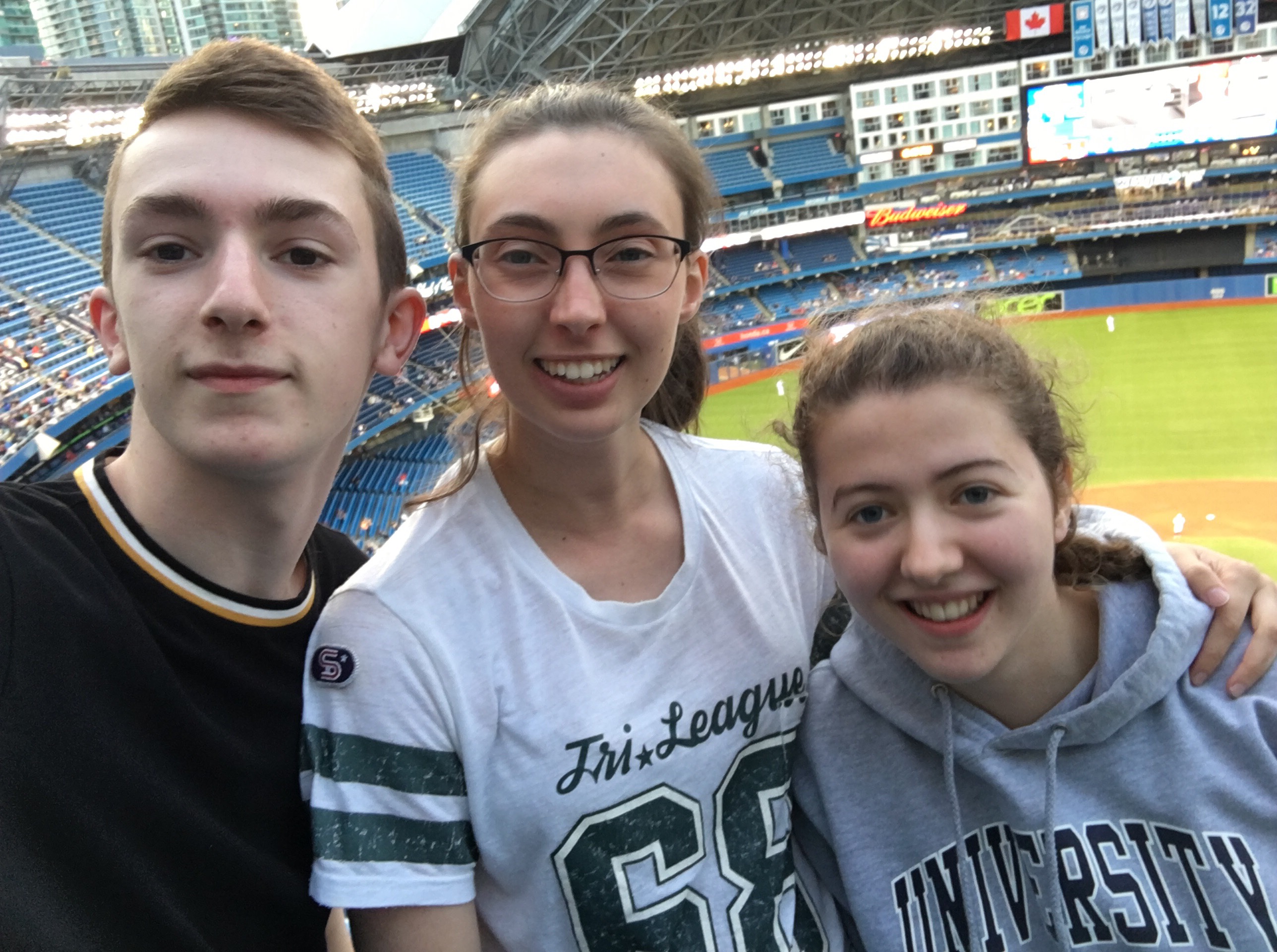
Tonight we went to a Blue Jays baseball game at the 50,000 seat Rogers Centre right beside the CN Tower. The atmosphere at the game was fantastic as there were team chants and songs throughout. The stadium is huge, has a retractable roof, and it was lovely seeing the sunsetting around it. It was Rebecca’s first time at a sports game and everybody’s first baseball game. We are pleased to say we thoroughly enjoyed it and are now committed Blue Jays fans. Unfortunately they lost 10-5 to the Los Angeles Angels; but it was still an amazing experience. Go Blue Jays!!


 Baird of Bute Science Scholarship 2019