Today we had the amazing opportunity to get a tour of the UHN (University Health Network) research facilities. It is the largest healthcare and medical research centre in Canada, and includes Toronto General, Toronto Western, Princes Margaret, Toronto rehab and the Michener Institute. It is unique as research is done within the hospital, which motivates the researchers to make a difference to patients.
We started the tour with a visit to the ‘Home Lab’, a room designed to emulate a typical Canadian house. This is so experiments can be carried out in a place where patients feel at ease and where the setting will have less impact on results while maintaining a controlled environment. The researchers are currently working on infrared sensors that could be used as safety devices within homes. The technology can detect if a person has fallen using data such as acceleration, speed of impact and position. Once developed, this technology will have the capability of detecting whether a person has fallen, asking them if they are alright, and if not it would notify the emergency services. This would improve the wellbeing of patients largely capable of living outside a care environment, reducing the demand for care homes and the costs associated with them.
There are also home robots being developed that are essentially a tablet on top of a moving element. It would be used particularly for patients living at home suffering from dementia by detecting if they are confused and connecting them to a person in a help centre.
We also learnt about a student engineer’s Masters project that hopes to reduce back injuries in hospital settings, addressing the growing issue amongst nurses and carers. It consists of a device which uses sensors attached to a belt and shoulder straps, which senses and alerts the user when their posture is incorrect during lifting. It would be used primarily for a short period of time to correct bad posture.
We then visited the ‘Sleep Lab’, which is used by doctors to diagnose people with sleep apnoea by attaching the patient to different monitors. Sleep apnoea is where the muscles and soft tissues in the throat relax resulting in the airflow being cut off for a short amount of time during sleep, and can prevent sufferers from breathing for an average of 6 seconds to 5 minutes. Researchers at the institute are currently developing small device that could be used for home detection of sleep apnoea for patients to use at home, increasing the accuracy of diagnosis. It records the sleep patterns and information on to an SD card, which the doctor can then use for diagnosis.
We then visited the ‘Fall Lab’. This provides data on how people fall and if this is affected by different conditions, age and process of recovery. The floor has variable forces to cause the fall. A harness prevents the person from ever actually hitting the floor.
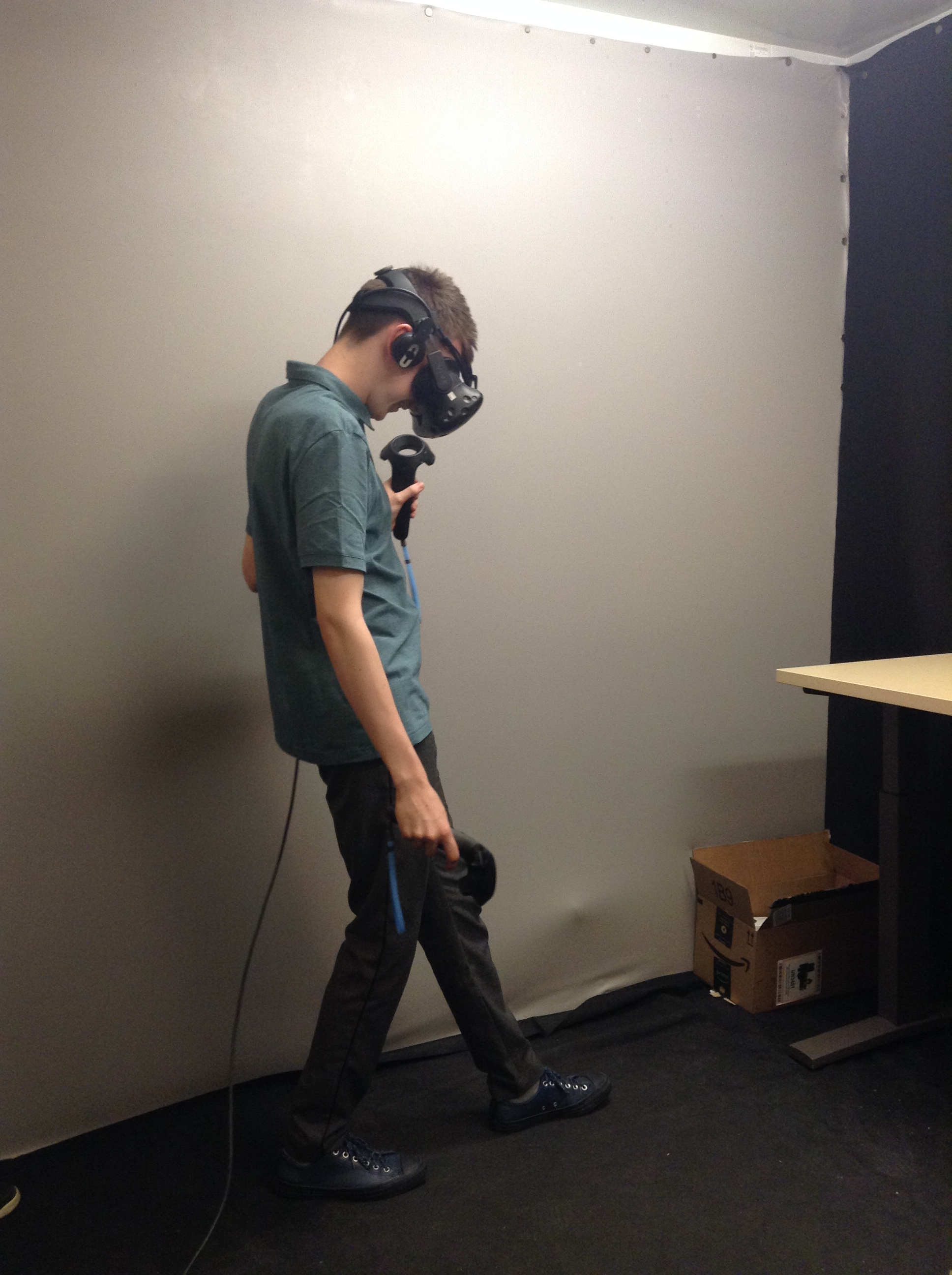
We also got to try a virtual reality headset. When the headset was put on it immersed us in a scene where we were standing on a plank at the top of a skyscraper building. We then walked along the plank while looking down. It was amazing how realistic it was – we were all terrified! The scenario was designed to be used to research how fear affects balance and also for rehabilitation purposes.
Afterwards, we visited a slightly more stereotypical lab, where we got to meet some scientists involved in researching the use of stem cells to repair broken or removed sections of bone as a result of tumour removal. A dissolvable scaffold material was being investigated to determine whether it would be effective to grow and differentiate stem cells into bone cells. We were lucky enough to be able to look at some under the microscope. The scaffold material was designed to dissolve after a certain period of time, allowing the absent bone to be replaced. We were then able to shadow another researcher who was preparing samples of human knee tissue in order to test the effectiveness of the stem cells on repairing damage to the knee. Knee injuries are one of the most common, and treating issues like these rather than offering replacements would be far less intrusive and hopefully reduce side effects.
We then had the opportunity to look around the lung perfusion labs. Lung perfusion has been a very successful technique in allowing donor organs to be viable for transplantation for a longer period of time, thus increasing the number of successful transplants. Combining lung perfusion with dialysis has also proved to be successful, allowing lungs to remain viable for up to 24 hours. It is hoped that in the future this technique could branch out to other organs and could allow them to be viable for many days, allowing organs to be transported greater distances to reach those who need them most.
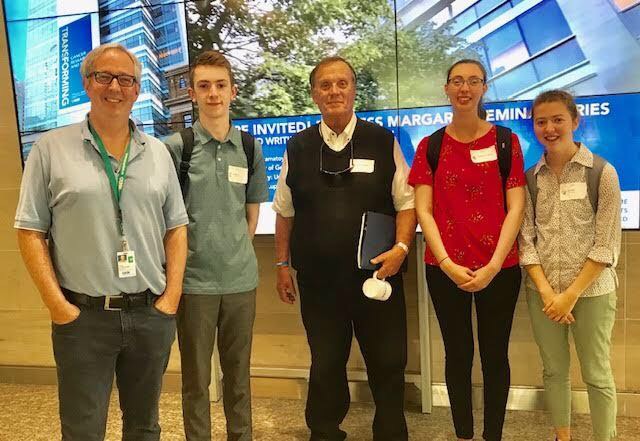
We were then introduced to Dr. Jonathan Downar, a psychiatrist at Toronto Western Hospital. He explained his new method of treating mental illnesses such as post traumatic stress disorder and depression. The treatment, called repetitive transcranial magnetic stimulation (RTMS), involves applying short magnetic pulses to specific areas of the brain. This has the effect of synchronising the areas of the brain involved in thought and emotion, which usually work out of synch when a person suffers from the illnesses listed above. Usually this treatment is prescribed only after pharmaceutical options have been explored and are ineffective. A drop in centre is ran for the treatment and patients are usually prescribed an hourly session, 5 times a week for 5-6 weeks. This can be a long time for some patients and may involve a commute, so they are investigating the possibility of an intensive 1 week course with 10 hours each day with hourly intervals. This course has proved more effective for some patients in recent tests, and may soon replace the long term prescription. They are also researching the possibility of creating portable devices for use in homes. This treatment could be the next break through in mental health treatment and even has potential in head trauma, Parkinson’s and Alzheimer’s.
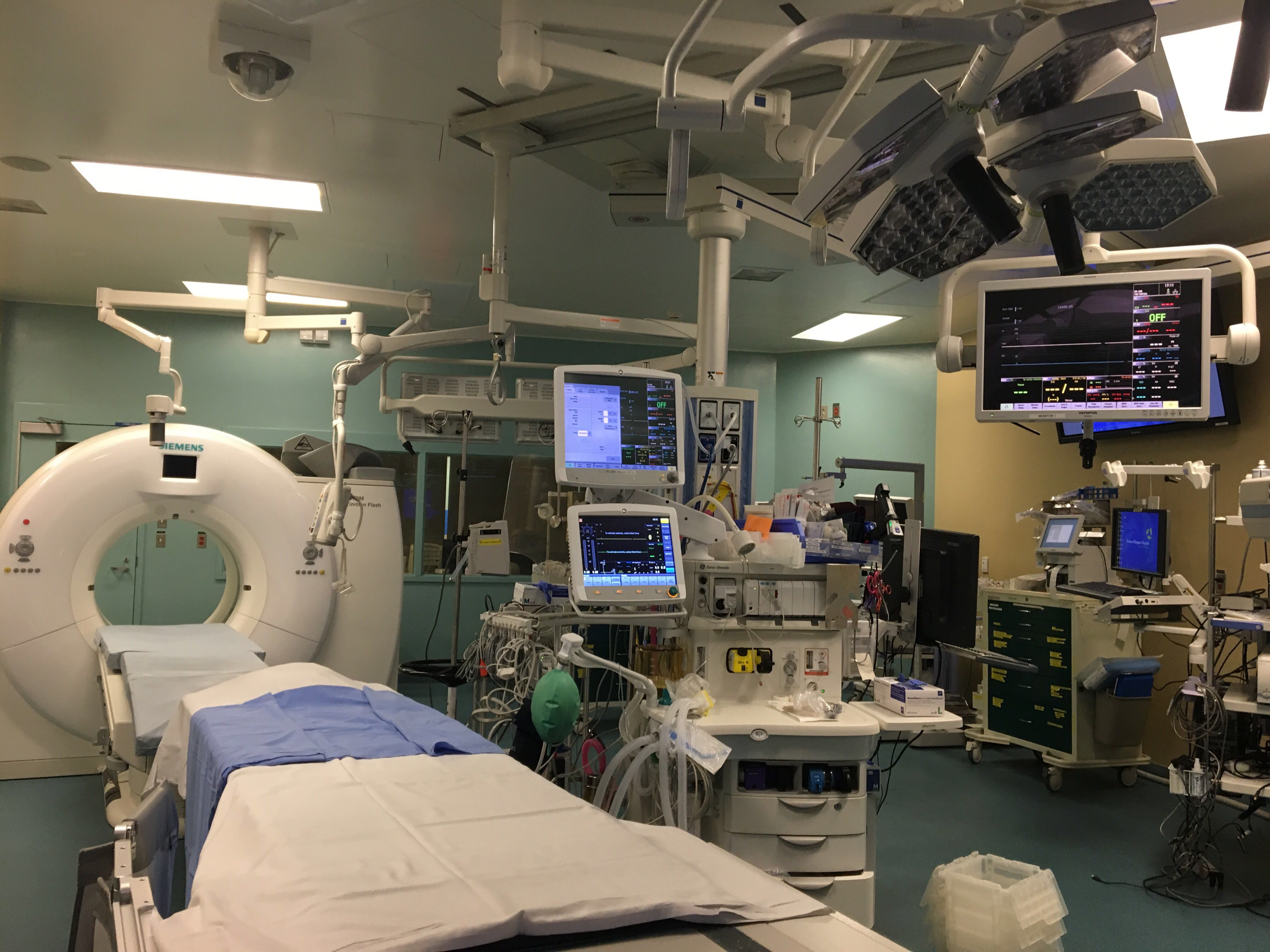
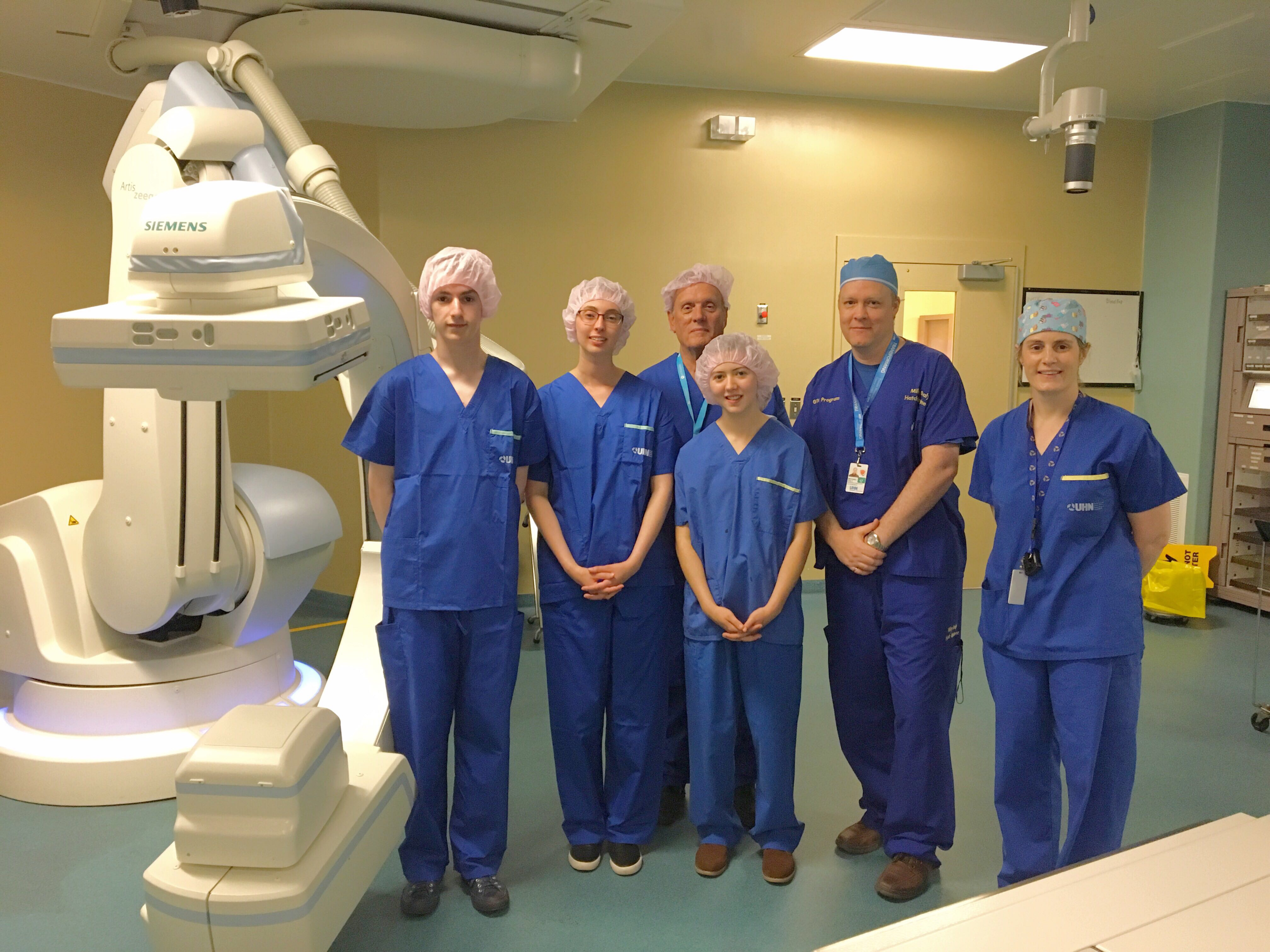
We then proceeded to an engineering lab, where researchers were collaborating on a project to find innovative new methods of removing tumours that are difficult to access or locate. A special type of CT scanner had been developed, which, unlike the traditional donut-shaped model, was attached to a robotic arm and had the ability to scan certain parts of the patient whilst avoiding attached cables and having to move the patient whilst under general anaesthetic, which is a risky and difficult procedure. The scan is intended to mainly be performed before surgery takes place, and gives a 3D, 360 degree scan of the body part, highlighting the tumour. The second piece of technology being developed to complement the CT scanner is a GPS devise which attaches to the surgical instrument being used to remove the tumour. This connects to a screen displaying the CT scan, and displays the location of the instrument in relation to the tumour. This allows more accurate tumour removal, drastically reducing the risk of cutting into the tumour or damaging he surrounding area more than is necessary. It also highlights a ‘margin’ around the tumour, which is the unaffected area of bone or tissue located around the tumour that must also be removed. It was fascinating to hear about these cutting edge devices and their applications. We were also lucky enough to visit one of the operating rooms where the technology is being tested. We got all dressed up in scrubs, and got to see the robotic CT scanner in action. It was really exciting to be able to visit the theatre and see the machine in person.
Today truly had been a fascinating and action packed day, full of new experiences. Needless to say, we had an early night before our busy day tomorrow, which would be our last day in Canada and our flight home.

 Baird of Bute Science Scholarship 2019