Today we gained experience in the biophysics aspect of research at the Gunnings lab. The main focus of today was the synthesis and extraction of proteins involved in the uncontrolled increase in the rate of cell cycle in cancer cells in order to design effective drug’s to target these proteins. The researchers use Ecoli which has been genetically engineered to express human proteins in order to be used in investigations to determine how well a ligand synthesised in the lab binds to the protein being targeted, STAT 5. Ecoli has been cultured on an agar plate until colonies were visible to the naked eye. An antibiotic was added to the agar plate to ensure that only one strain of bacteria that was resistant to it, the required bacteria, survived. One colony is then transferred to a liquid broth and cultured until it reached a critical mass. It is important that only one colony is added to ensure that the cell line remains constant. When the culture reached critical mass, a specific sugar (IPTG) is added which stimulates the bacteria to express the STAT 5 protein. STAT 5 is then extracted from the cells by bursting the cells, before using a centrifuge to separate the component parts by mass. The sample is then passed through a chromatogram, which consists of a tube with many levels each containing holes of different sizes that the sample passed through. UV was applied to the sample to produce a graph which showed the degree of impurity left in the sample and the sizes of each component. The largest peak was the protein of interest, which told you at what point in the pure protein could be extracted. The pure protein had two main fates. It was either used for testing new drugs to examine their efficacy before testing in cancer cells, or to undergo protein crystallisation to allow researchers to better understand its internal structure, which will assist with the development of drugs.
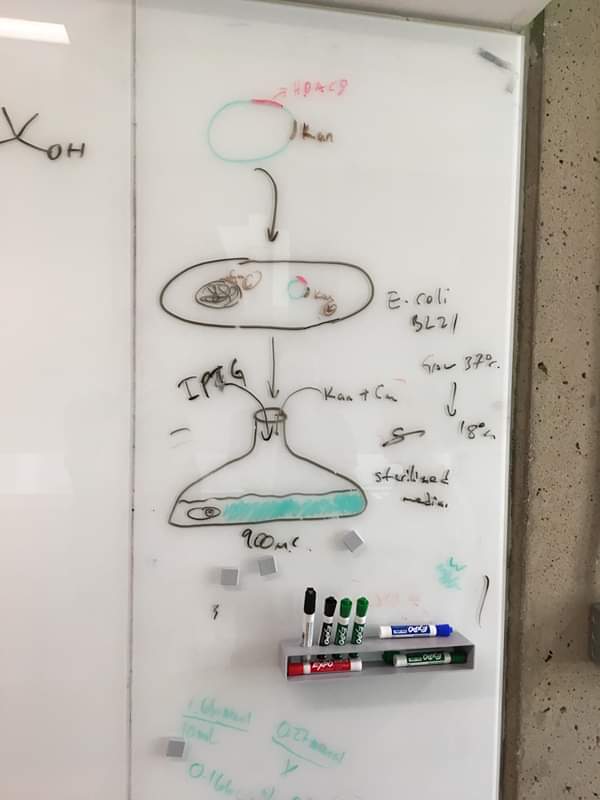
We helped to prepare the liquid broth by weighing a specific quantity of powdered broth and adding it to a specific volume of water in a large conical flask. The opening of the flask was then sealed with tin foil, before being put in an autoclave at 121 degrees to kill any bacteria from the environment which may have contaminated the broth, however some rare forms of fungi remain. Autoclave tape was added onto the tinfoil, and when the autoclave reaches the required temperature, the tape turns colour to ensure sterilisation was complete. This ensures that it only grows the required bacteria.
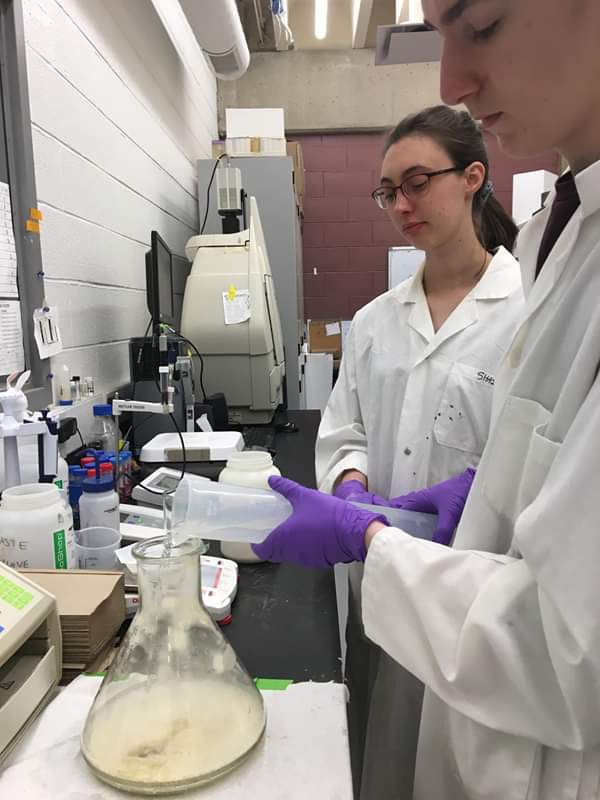
We then met Aaron, a PhD student in his third year. We watched how a gel electrophoresis procedure was carried out. Tubulin is a protein which regulates mitosis, however it doesn’t require a transcription factor in order to active it. It is extracted from the brains of pigs and is very expensive. As Tubulin regulates mitosis it is a good aim for drugs targeting cancerous cells. By preventing Tubulin from promoting cell division it can reduce the rapid growth of cancer cells. Portions of are tubulin frozen using liquid nitrogen (which is -200 degrees so flash freezes). This allows small aliquots to be used at a time.
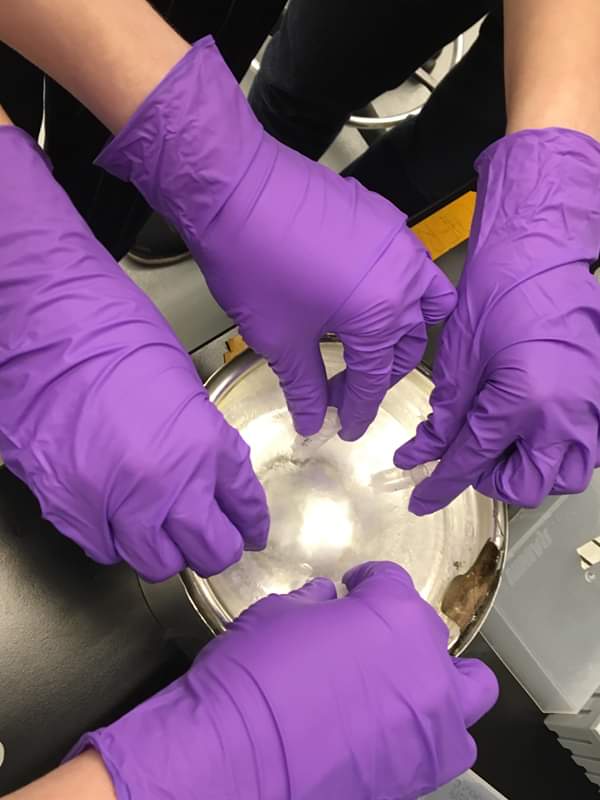
The procedure of gel electrophoresis uses a dimple tray to add small volumes of Tubulin and GTP, which is required for Tubulin to carry out mitosis. This was then heated to 37 degrees as heating to body temperature gives more accurate results as it mimics cells in the body. After this the drug was added that could prevent the Tubulin from working. This would be added using serial dilution, which allows the activity of the drug to be found at varying concentrations. The gel electrophoresis produces results after GDI is added. Results with two lines mean the GDI has bonded to the Tubulin therefore the drug hasn’t been entirely effective at that concentration. When only one line is seen that concentration has been effective at preventing the Tubulin from carrying out mitosis.
It was a lovely afternoon in Mississauga today, so we sat outside on the campus grounds and discussed what we had learnt today whilst soaking up some sun. We experienced such a variety of different projects today which definitely expanded our knowledge of drug development as well as building on knowledge we had gained during our advanced higher biology and chemistry courses.

 Baird of Bute Science Scholarship 2019